


PAST POSTS 
Close 
Connecting More Deeply with Nature to Connect More Deeply to Yourself
15.5.2017
Most of us love nature. We enjoy spending time in the outdoors and in studies most of us say we feel better for it. So, it’s no surprise that being near nature is widely recommended as a way of dealing with some of the things that trouble us.
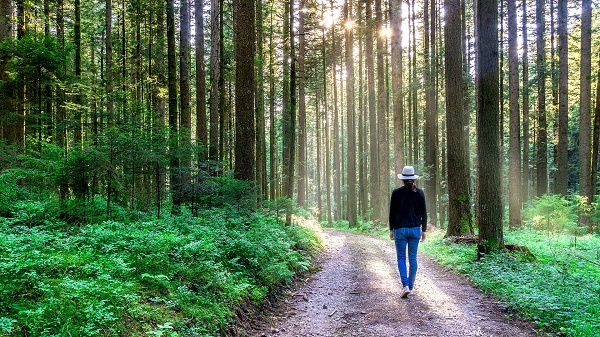
Why is nature so good for us?
In 1973, the writer, philosopher and social psychologist Erich Fromm coined the term ‘biophilia’ to describe our innate tendency to seek connections with nature and other forms of life. The term was then taken up by Edward O. Wilson, who suggested that the tendency of humans to focus on and to affiliate with nature and other life-forms has, in part, a genetic basis. Wilson suggested that we as human beings have an automatic impulse for conservation and caring for the natural world. Not only that. He proposed that nature cares for us as much as we feel the need to care for it. When we engage with the natural world, it repays us in turn.
A recent study by Natural England found that taking part in activities outdoors helped people dealing with mental health issues, such as anxiety, stress and depression. The study focused on three different ‘green-care’ activities: care farming, environmental conservation and social and therapeutic horticulture. People engaged in these activities had a greater level of social contact, sense of belonging and personal achievement, which subsequently put them in a better state of wellbeing.
Mindfulness and nature
We know that mindfulness has a positive effect on our well-being, which makes the combination with nature a powerful one. One way in which the two are combined is in healing gardens.
Healing gardens are not a new thing and can be found at many places where people are convalescing or dealing with illness such as hospitals, hospices and nursing homes. Since 2011, a special healing garden has been open in Denmark called Nacadia. Specifically designed to offer relief from psychological states, such as stress, ten week courses are on offer for patients to integrate mindfulness and acceptance training with nature.
The constant flux of nature is used within the garden to teach patients about the processes and changes that are uncontrollable, helping them accept and allow the present to be just as it is. Planting seeds and falling leaves often have unexpected outcomes and lots can be learnt about the ebb and flow of life from being at one with nature.
Making an outdoor space a mindfulness area
Whether you have a small outdoor space or a large garden - there are plenty of ways you can adapt the space, so that you can enjoy meditation outside or just enjoy the moment being at one with your surroundings.
First, look for a specific space that looks perfect to quietly spend time in. Maybe it’s beneath a beautiful tree, or on a grassy area. If you have two trees close together, you might want to invest in a hammock. Make sure it’s as far away from distractions as possible to create a place that you can escape the stress of the modern world to. You might want to separate this special area from surrounding spaces, perhaps with plants or paving stones.
Think about sensory accessories that you might find relaxing. A water feature or wind chimes may be a good addition to your mindfulness area if you enjoy those sounds. They also might help drown out any external sounds such as traffic.
Cultivate plants in the area so you can touch soil and get hands on with nature. Planting seeds will allow you to see the unpredictability of natural forces in action and may help with letting go of expectations and surrendering to the present moment. Every time you use your outdoor area, look to see what’s changed and celebrate the area in its present state.
To learn about mindfulness training contact rachel@mindfulnesswords.com or call (+44) 01223 750660
PAST POSTS
25.10.2018
19.07.2018
22.01.2018
15.01.2018
08.01.2018
20.12.2017
17.12.2017